
Tree Safety and the Duty of Care: A Guide for Schools and Parish Councils
2026-08-26 · Heartwood Tree Management
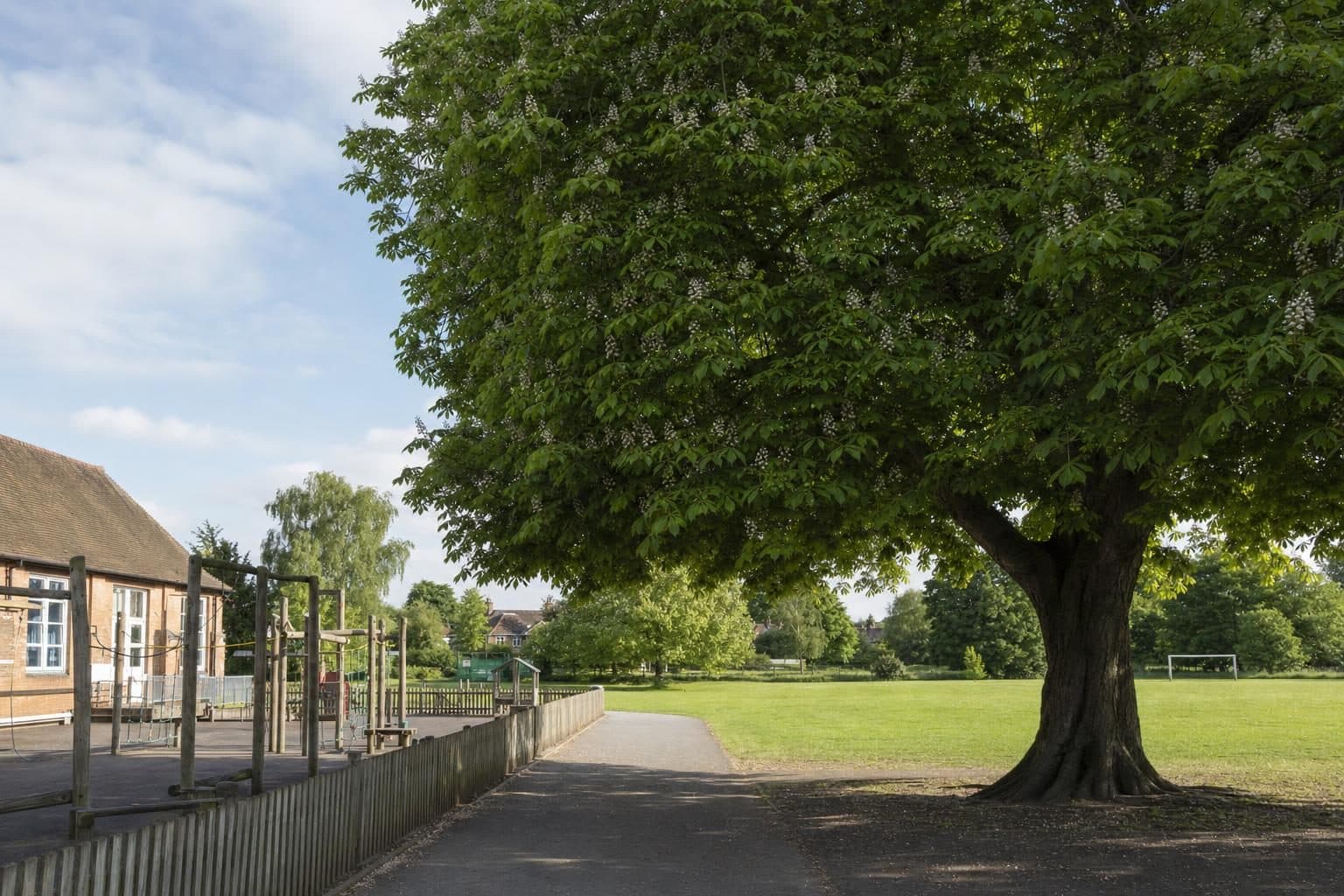
Every school, parish council, village hall committee and playing field trust owns the same quiet liability: trees near people. The Occupiers' Liability Acts and the HSE's guidance are clear that a landowner must take reasonable care, and after an incident, the first question asked is always the same: when were these trees last inspected, and where's the record?
What "reasonable" actually means
The courts don't expect every tree examined weekly. They expect a proportionate, documented system:
- Zoning: know where your high-use areas are, playgrounds, car parks, paths, road frontages, and prioritise trees that could reach them.
- Regular inspection: a competent inspection of higher-risk zones every 1-3 years, plus checks after major storms.
- Records: a written tree schedule, findings, recommended actions and, crucially, evidence the actions were done.
- Competence: inspections by someone trained to recognise defects, decay and species-specific failure patterns.
The trap of the reactive approach
Most organisations only look at trees after a branch drops. That's exactly the pattern that fails the reasonableness test, and it usually costs more, because urgent works are priced as emergencies while planned works are priced as a programme.
A programme, not a panic
Heartwood runs cyclical inspection programmes for schools, parishes and estates across Dorset: a mapped tree schedule, risk-prioritised recommendations in plain English, a re-inspection calendar, and our own NPTC-certified teams to carry out any works under the same accountable roof, with DBS-checked staff for education settings. One programme, one file to show your insurers.
Start with a free walkover: tree surveys and inspections or 01929 480 995.