
Hedge Cutting Season: When You Can Cut, and When You Cannot
2026-09-03 · Heartwood Tree Management
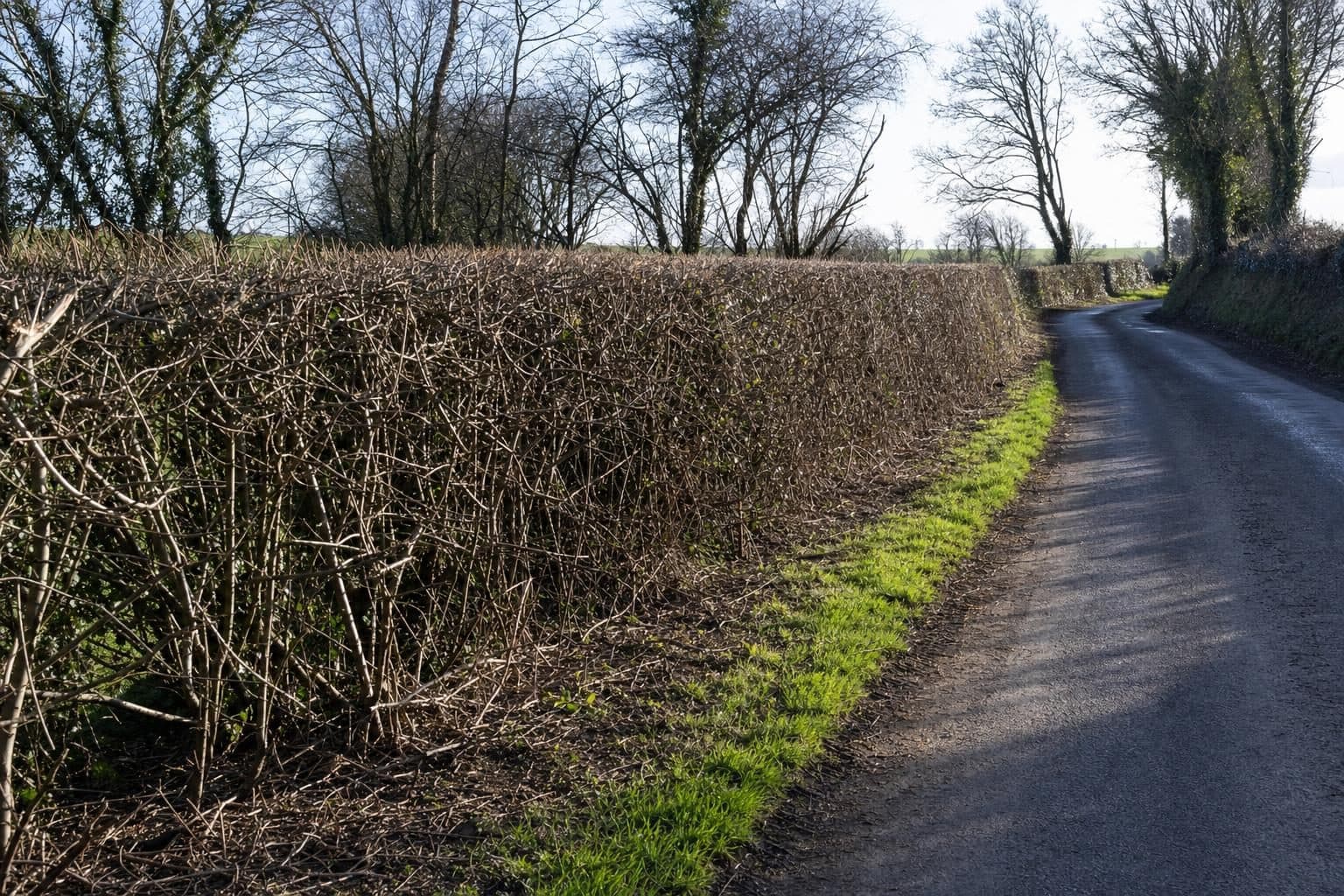
Every year we have the same conversation in March, and again in August. Someone wants a hedge cut, and the answer depends on the date, on what kind of hedge it is, and on what is living in it.
Two separate rules, and they are often confused
Nesting birds — every hedge, all year. Wild birds, their nests and their eggs are protected under the Wildlife and Countryside Act 1981. It is an offence to intentionally damage or destroy a nest while it is in use or being built. That applies to a garden hedge as much as a farm one, and it applies in any month: the main season runs roughly March to August, but some species nest earlier or later, and a mild winter brings it forward. So the question is never simply "is it September yet", it is "is anything nesting in this hedge" — which is why we check before we cut, whatever the date.
Agricultural hedgerows — a fixed closed season. Since 23 May 2024, hedgerows on or next to land used for agriculture must not be cut or trimmed between 1 March and 31 August under the Management of Hedgerows (England) Regulations. This is a legal date restriction, not just good practice. It does not apply to the boundary of a private garden. There are specific exemptions — a hedge overhanging a highway or footpath, one that is dead, diseased or insecurely rooted and likely to fall onto a road, hedge-laying or coppicing between 1 March and 30 April, and a genuine risk to health or safety — plus a notification route for cutting in August ahead of sowing oilseed rape or temporary grass, and written derogations from the Rural Payments Agency. Even under an exemption you may only cut the part of the hedge the exemption covers, you must keep a record, and the nesting-bird protection above still applies. The current rules are at gov.uk: hedgerow management rules.
What this means for your hedge
- Garden hedges, September to February: the usual window for maintenance and for hard renovation back into old wood. We still check for late or early nests — a dense evergreen can hold one at odd times of year.
- Garden hedges, March to August: we inspect first. Light trimming of a hedge with no nesting activity can sometimes go ahead. Anything heavy waits, and if we find an active nest we stop and come back once the birds have fledged.
- Farm and field hedges: no cutting or trimming from 1 March to 31 August unless one of the exemptions genuinely applies to that stretch of hedge. September to February is the working window, and a two- or three-year rotation is better for the hedge and its wildlife than an annual cut.
- Safety at any time: a hedge blocking a sightline or falling onto a road can be dealt with, but only the part that needs it, with a nesting check first, and — on agricultural land — under the relevant exemption with a record kept.
Planning around it
The fortnight before the farmland season closes and the first month after it reopens are the busiest of our year. If a hedge needs real work rather than a tidy, book early. September and October are the best months for most hedges: a full season of growth comes off and the hedge goes into winter looking sharp. Renovation belongs in the dormant season — a tired hedge cut back hard between November and February recovers properly the following spring.
We check every hedge for nesting activity before work starts. Free quotes across Dorset and Purbeck on 01929 480 995.
Reviewed against the government guidance current at the time of writing. Rules change; check the link above before relying on a date.