
The Heathland Management Calendar: What Happens on Dorset's Heaths and When
2026-08-26 · Heartwood Tree Management
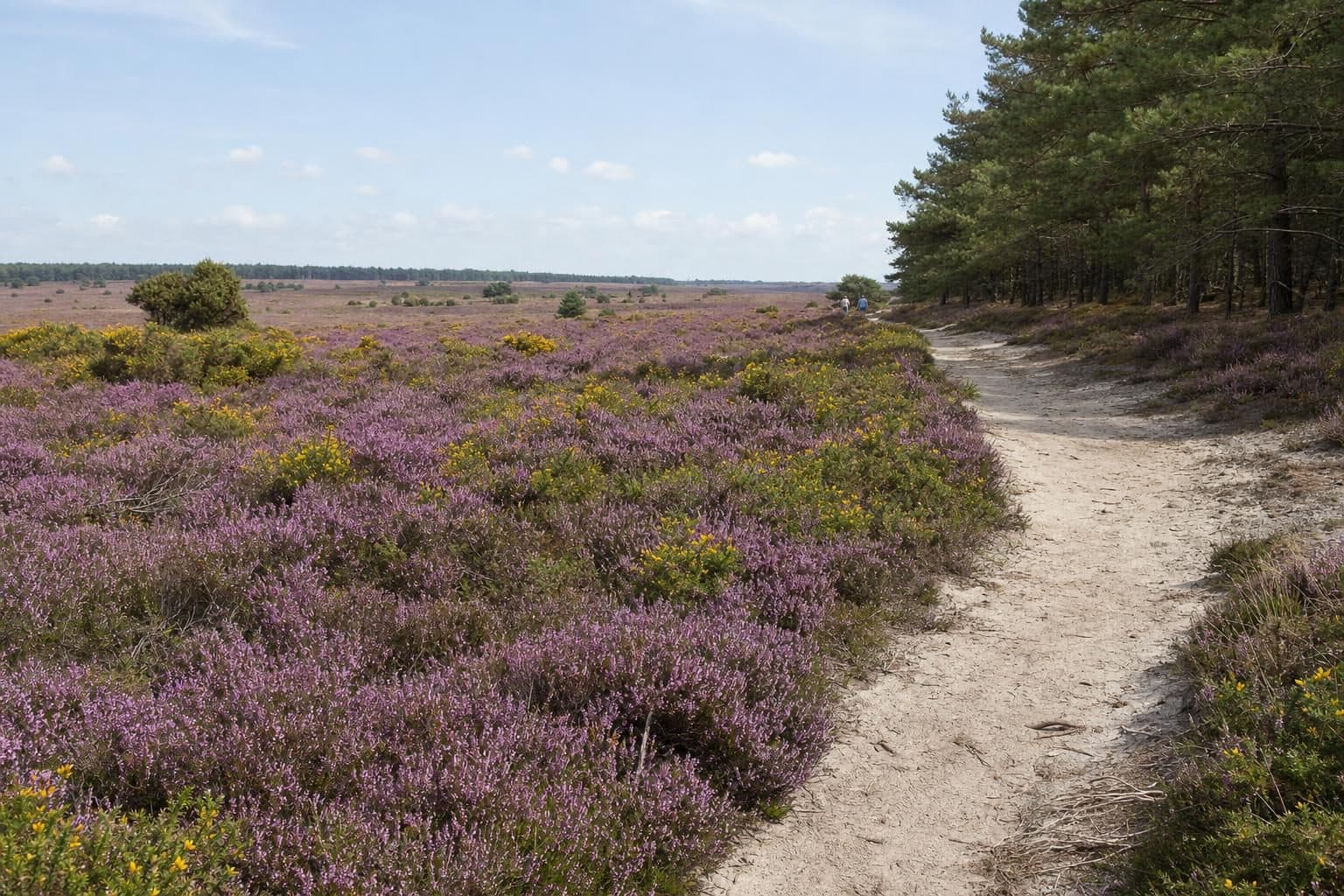
Lowland heath is rarer than rainforest, and Dorset holds some of the best of what's left. It looks untouched, and that's the illusion. Without constant, carefully timed intervention, heath turns to birch and pine scrub within a couple of decades, and the sand lizards, nightjars and Dartford warblers go with it.
Winter (October-February): the heavy work
Almost all cutting happens here, outside the bird nesting season: birch and pine clearance, rhododendron eradication, firebreak maintenance, gorse coppicing on rotation. Wet winters demand low-ground-pressure machinery, heath soils scar easily and the scars last decades.
Spring (March-May): hands off, eyes open
Ground-nesting birds settle in from March; reptiles emerge from hibernation. Works stop or shift to infrastructure, fencing for conservation grazing, boardwalks, signage. Monitoring begins: nightjar churring surveys at dusk, reptile refugia checks.
Summer (June-August): grazing and bracken
Cattle and ponies do the subtle work no machine can, breaking up dominant growth and creating the varied structure rare species need. Bracken control happens in high summer when the fronds are fully out.
Autumn (September): bare ground and planning
Small scrapes of bare sand are created for basking reptiles and burrowing invertebrates, and the winter works programme is agreed with Natural England where sites are designated.
Heartwood delivers this calendar for conservation bodies and landowners across the Purbeck heaths, clearance, grazing infrastructure, firebreaks and reporting, all within SSSI consents. See heathland restoration or call 01929 480 995.