
Ash Dieback in Dorset: What Landowners Need to Do Now
2026-08-26 · Heartwood Tree Management
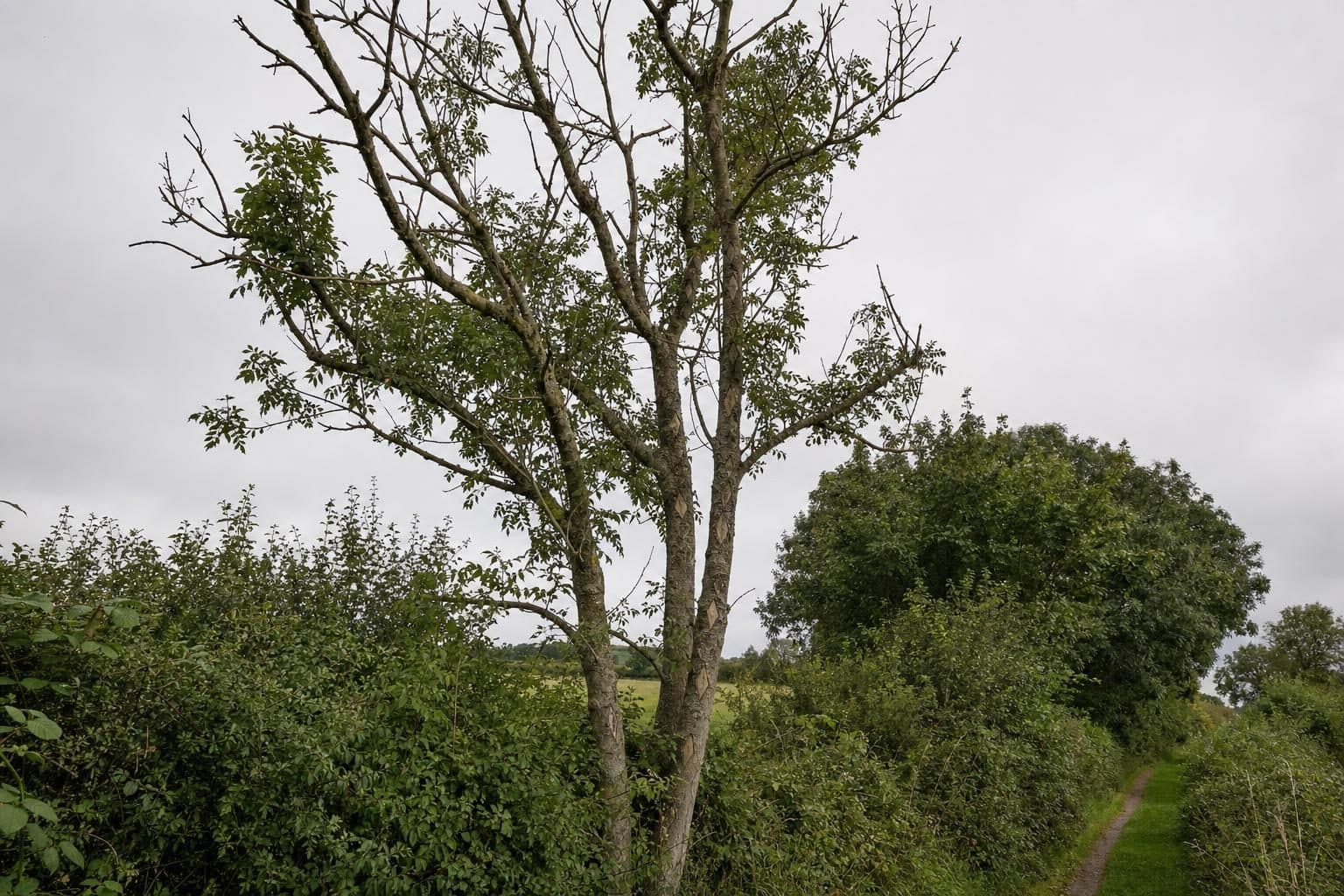
Ash dieback (Hymenoscyphus fraxineus) is no longer approaching Dorset; it's here, in effectively every parish. Most ash will be affected to some degree, and a significant share will decline to the point of being unsafe. If you own ash near roads, buildings, paths or neighbours, this is now a management question, not a botanical one.
How to read a declining ash
The accepted approach grades crown condition in four classes, from full leaf (class 1) to a skeleton with over 75% loss (class 4). The critical management point: diebacked ash becomes dangerous to climb. The disease makes the timber brittle and unpredictable, so a class 3-4 ash that could have been dismantled conventionally last year may need a MEWP or crane this year, at greater cost. Acting one season earlier is routinely the difference between a straightforward job and an expensive one.
Your legal position
- The duty of care is yours: a landowner who knows (or should know) a tree is hazardous and does nothing carries the liability.
- Dieback doesn't override TPOs or conservation areas, consent or notification is still needed unless the tree is immediately dangerous, and you should evidence that with photographs and a professional opinion.
- Not every infected ash needs felling. Trees away from targets can be left to decline naturally, they're superb deadwood habitat.
A sensible plan
Survey your ash now, triage by target and condition, do the class 3-4 trees near targets this winter, and monitor the rest annually. Heartwood surveys and dismantles diseased ash across Dorset, safely, with the right access equipment including our own 22m spider lift. Start with a free assessment: 01929 480 995 or book a survey.